We’re seeing that electrification has matured beyond early experimentation and excitement, and it’s now embedded in real-world product strategies across multiple industries around the globe. However, that maturation coincides with rising energy costs, shifting policy directions, supply chain challenges, and other uncertainties. Collectively, it’s creating a new segmentation among electrified sectors: traditional vs. emerging.
Real constraints, such as cost pressures, significantly slowed some industries’ electrification efforts, leading to uneven evolution across applications and regions. While traditional markets exhibit more resilience, both traditional and emerging markets must adopt a selective, application-driven approach to developing new solutions to remain competitive.
Today, momentum and hype don’t go far on their own. Electrification success depends on aligning your business case, application fit and market conditions.
The Market is Splitting: Stable Core vs. Uncertain Expansion
Real constraints are impacting the economic viability of emerging electric platforms at scale, and many OEMs are no longer prioritizing these projects. OEMs continue to leverage pilot development and testing to pursue innovative ideas, but products and markets that aren’t fully proven haven’t received the investments or manufacturing commitments required to scale.
Traditional Electrified Markets Continue to Perform
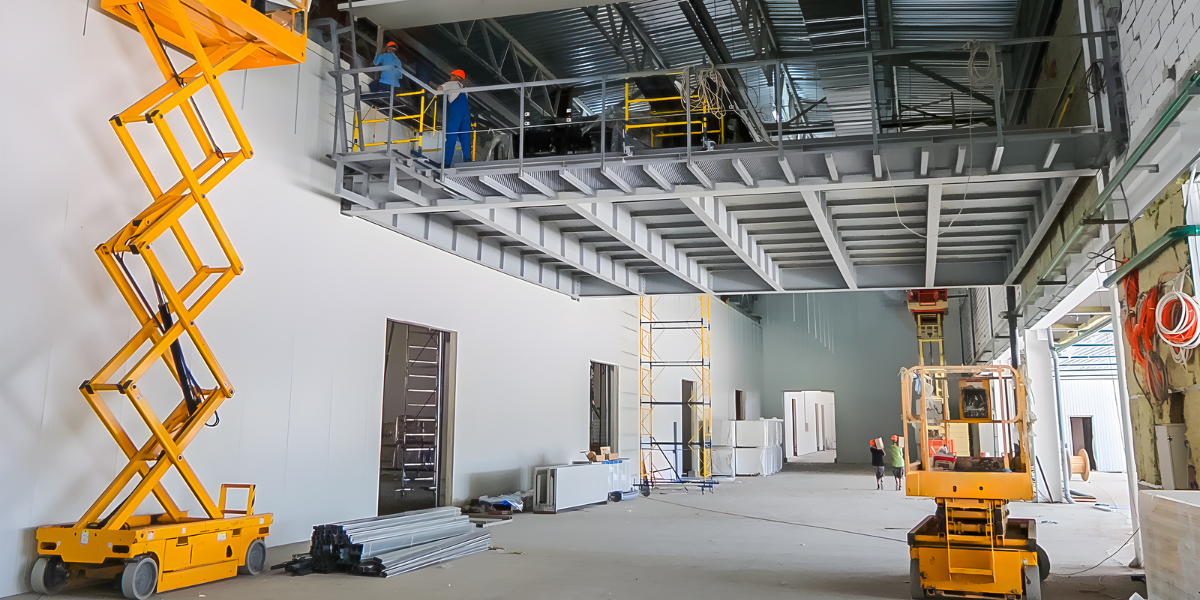
Electrified solutions for segments like material handling, warehouses, aerial work platforms and golf carts have shown sustained growth for decades, demonstrating their clear economic viability. Many of these machines have even undergone further development due to recent trends around automation, as with some scissor lifts, and optimizing data-driven operations.
Despite severe economic volatility, the proven and durable business case for the total cost of ownership (TCO) of adopting electric platforms has long been established among many OEMs and fleet managers in these industries.
Emerging Electrification Markets are Slowing
Only a few years ago, OEMs developing or manufacturing products for emerging electrification markets generated considerable hype around their pilots. In particular, there was excitement for large electric vehicles and machinery used in heavy-duty applications and difficult environments, like construction or agriculture. But despite technology improvements since, constraints like geopolitical uncertainty, infrastructure readiness gaps, rising costs and supply chain difficulties have dampened that enthusiasm.
The Return of Fundamentals: Business Case Drives Everything
Faced with rising energy costs, OEMs and fleet managers have doubled down on prioritizing the business case for electrified vehicles and equipment. As a result, OEMs now emphasize cost optimization for electric platforms and pursue innovations that help achieve it.
Earlier phases of electrification were heavily influenced by environmental, social and government (ESG) mandates and priorities. Although sustainability remains a driver, it no longer carries the same weight, and many financial incentives and programs are unreliable. Instead, fleet managers make purchasing decisions with respect to their three most important costs:
- Upfront system cost
- Total cost of ownership
- Return on investment
While upfront costs can represent a significant value, fleet managers increasingly understand how electric platforms eclipse internal combustion engines on TCO. Lower fuel costs, less maintenance and telematics data that helps optimize operations warrant the initial investment.
Electrification markets are growing increasingly competitive as the industry matures and cost pressures rise. Many of the OEMs and suppliers that initially pursued electrification have since built considerable competitive advantages for themselves, such as industry partners, robust supply chains, talented personnel and multiple marketplaces.
Some OEMs now operate as global players, entering new markets with the brand recognition and resources of leading companies. Because of the rapid scaling of its manufacturing, China, in particular, has been able to exert downward pressure on component pricing. This pressure forces a structural shift toward cost optimization and innovation.
Additionally, over time, existing supply chains and early technological innovations become more accessible and affordable, further increasing competition by lowering barriers to market entry, both domestically and globally. Many OEMs have realized they need to manufacture and operate at lower costs than before or create greater value by addressing evolving customer demands.
New Demand is Emerging from Unexpected Drivers
Although we’ve witnessed OEMs prioritizing proven applications following the split between traditional and emerging electrification markets, technological innovations, such as artificial intelligence (AI), have begun to create new demand for both.
At the same time, recent supply chain challenges have pushed OEMs to rethink how and where they operate. More OEMs are choosing to re-shore manufacturing to improve resilience and reduce dependence on complex logistics networks. As these facilities take shape, many are being designed with automation and robotics as core considerations rather than afterthoughts.
That shift is already visible in production environments. Adoption is increasing for applications such as automated material handling, autonomous mobile robots (AMRs), automated guided vehicles (AGVs) and remotely operated machines. Because these systems are inherently electric, their expansion continues to reinforce demand for electrified platforms.
AI is also becoming increasingly important, particularly through the use of telematics data. While operators have long had access to large volumes of system data, AI enables them to extract more meaningful insights from it. Identifying patterns in vehicle usage, for example, can help optimize routes within warehouses, reducing congestion and extending battery life. These incremental gains are driving growing interest in integrating these capabilities with established electric systems.
As deployment expands, AI requires a larger data infrastructure footprint, particularly in the form of data centers. This buildout is already affecting traditional electrified equipment markets, creating both pressure on component supply and new opportunities for electrified construction equipment.
Most of this demand remains concentrated in traditional electrification markets. However, the direction is starting to shift. Applications such as delivery robots and autonomous service equipment are beginning to take shape and will increasingly contribute to demand from emerging segments
Technology is Expanding What’s Possible, but it Doesn’t Guarantee Adoption
Although advances in robotics, AI, and telematics are expanding what electrified systems can do, the business case and economics still remain the primary drivers for OEMs and purchasing fleet managers. Technological capability alone is not enough, particularly when more complex technologies and operations may require additional infrastructure investment.
Technological innovations among emerging and traditional markets are now enabling:
- Higher system integration – Continually improving system integration supports more scalable manufacturing processes, reclaims on-board space and weight and improves the communication between systems and the telematics data.
- Improved uptime and efficiency – AI-driven analysis, telematics data and sensors provide warnings for fleet management necessities, such as predictive maintenance issues, battery charging and resource allocation.
- Automation-led value creation – OEMs and equipment purchasers can improve productivity and efficiency by augmenting operations with automation and robotics.
Infrastructure Remains the Primary Constraint
A key barrier to broader electrification remains infrastructure readiness, particularly grid support and fast chargers. Limited access to a reliable power supply for continuous or opportunity charging continues to constrain deployment in certain heavy-duty applications and remote environments. In the interim, generators, power packs and hybrid engines are providing workable solutions and are already becoming more common for large machines on farms and construction sites.
Scaling Electrification Requires System Integration and Stronger Partnerships
Every OEM looking to scale and remain competitive must evaluate how to integrate their systems with suppliers and partners, as electrification is no longer about integrating individual components. Broadly, OEMs and partners have begun integrating:
- Hardware, software and controls
- Charging, battery and system architecture
- Lifecycle support and service capabilities
Integrated systems not only improve performance and data collection but also simplify logistics and manufacturing processes. If eight components or systems are already connected into three integrations, OEMs have effectively reduced the number of final assembly steps.
As electrification becomes more complex, no single company can deliver complete solutions on its own. Co-development models are becoming more common, reshaping how OEMs and suppliers work together. While many OEMs already have established supplier relationships, expectations are shifting toward earlier and more active collaboration, with suppliers contributing during the design phase rather than responding to finalized specifications.
Suppliers are also expanding their own ecosystems. For example, Delta-Q’s battery compatibility program, Charged by Delta-Q, helps OEMs identify which batteries align with specific chargers and charge profiles to deliver optimal performance. Participating in government initiatives, such as California’s Clean Off-Road Equipment (CORE) program, can also create new opportunities.
This is the New Normal: Uncertainty with Opportunity
Recent years have been marked by volatility and rapid change, far from the market stability once expected for electric platforms. OEMs must prepare and operate accordingly, fostering agility, flexible strategies, and faster response cycles.
While business case, application fit, and market conditions shape the external success of electric solutions, an organization’s internal resilience ultimately determines whether that success endures. Priorities are also shifting toward cost optimization, and more targeted, application-driven strategies as electrification matures.
To capture future opportunities, OEMs and suppliers must focus on disciplined investment, alignment with application requirements, and system-level integration to unlock performance and scalability. The next phase of electrification will not be defined by how many applications convert, but by where conversion delivers the greatest value.