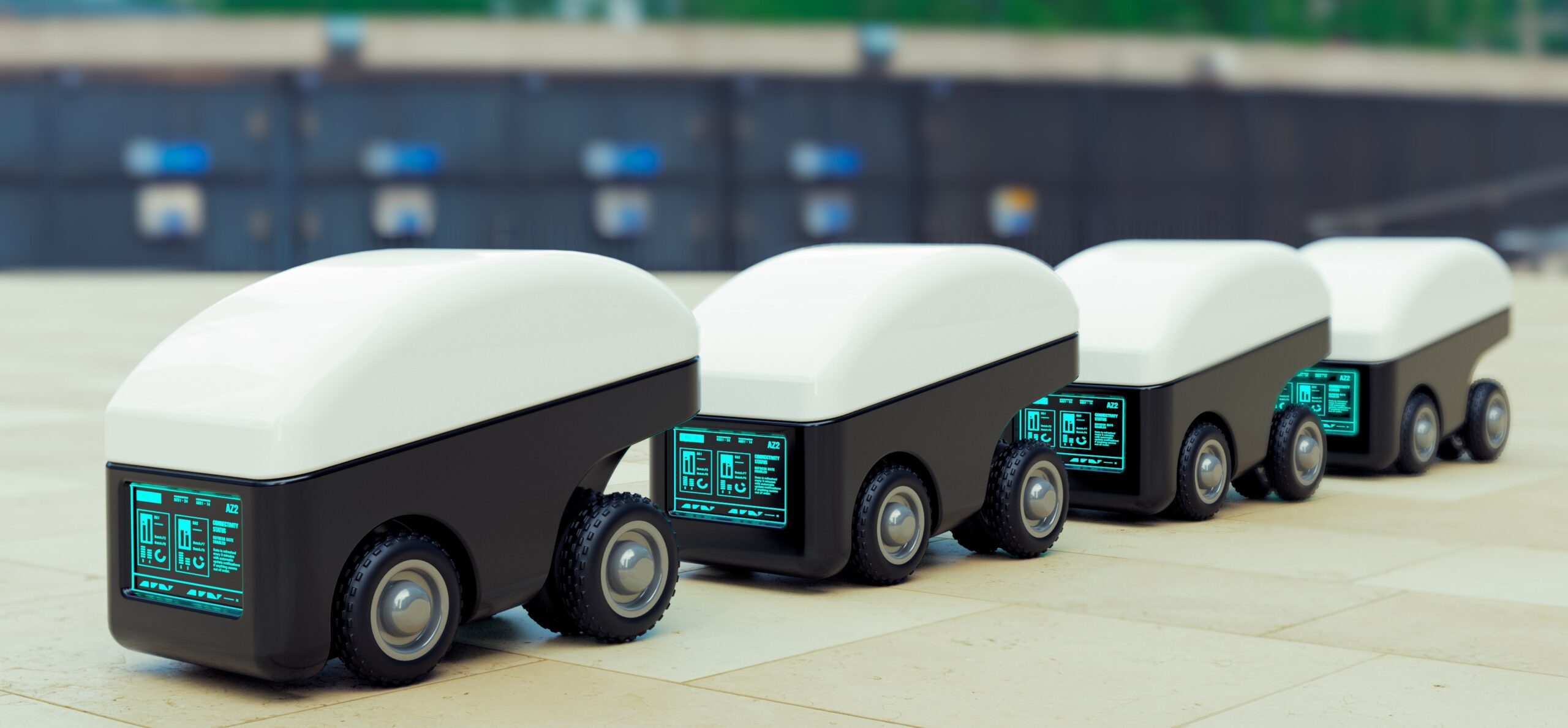
Recent innovations in mobile robotics have contributed significantly to industry growth. Examining ‘mobile manipulators’, a form factor particularly suited for logistics and manufacturing, the Robotics Center of Silicon Valley (SVRC) reports that 2025’s units shipped (2,200) grew more than 60% over 2024’s numbers (1,400). This reflects the trend of customers scaling initial mobile robot investments into autonomous fleets. Real-world deployment continues surging as fleet operators experience success with operational uptime and achieve significant returns on their investment (ROI).
However, hardware innovation has outpaced software. Robotics is transitioning from an industry often driven by hype and new form factors to one that must continuously demonstrate proven business cases. New market leaders will emerge from the original equipment manufacturers (OEMs) that develop and operationalize data collection infrastructure to optimize fleet orchestration. To do so, OEMs must leverage the one constant across all mobile robot fleets: charging.
Mobile Robotics Market Outlook
The mobile robotics market is driven by factors that include hardware innovations, hardware costs, uptime requirements, improving automation capabilities, decreasing data collection costs, and labor shortages.
For example, hardware innovations and cost reductions led to a 33% drop in the average price of industrial robots over the last decade, with the hourly cost of data collection and lithium cell prices following similar trajectories, falling roughly 34% and 30%, respectively. The 2015 price for a LiDAR sensor ($75,000) has fallen over 99% ($1,000 or less), and 40% of all deployments now leverage Vision-Language-Action (VLA) models for improved performance, whereas none did in 2024.
More operations can now evaluate mobile robots as viable solutions, whether purchasing units as an investment or leveraging the emergence of ‘Robots-as-a-Service’ (RaaS) subscription models. Early commercial deployments in logistics, manufacturing, and warehousing can scale more affordably. This is reflected in the industrial robot segment remaining the largest revenue producer, and in the rapid adoption across logistics and warehousing, which is expected to result in 35% more total units deployed in 2026 than in 2025.
Why Charging Is Becoming a Competitive Advantage
Keeping a fleet of mobile robots operational requires charging each unit regularly. This remains true whether introducing a few robots alongside people or managing a fleet of hundreds of autonomous mobile robots (AMRs).
But as operations scale their mobile robotics fleets, they discover that charging capabilities are increasingly becoming core operational infrastructure that is essential to deployment. Compared to incrementally adding more robots and robotic capabilities, maximizing fleet utilization (and developing the charging infrastructure to support that uptime) proves more important.
Charging station availability and throughput must be scaled proportionally with the introduction of more robots for those units to achieve any operational impact or ROI. When mobile robots cannot charge due to insufficient charging infrastructure (whether because of slow charging speeds or station unavailability), downtime increases and productivity suffers.
Moreover, charging infrastructure offers the greatest potential to facilitate the telematics and operational data collection necessary to refine training and optimize fleet orchestration. Integrations between chargers, batteries, battery management systems (BMS) and other systems already help facilitate onboard collection and communication of telematics data via CAN bus. On-road electric vehicles (EVs) also demonstrate the potential to leverage charging infrastructure to communicate data through the widespread adoption of the Open Charge Point Protocol.
Charging Considerations for Mobile Robots
Despite the operational advantages provided by mobile robots, fleet management remains complex. Successful adoption starts by assessing the application and the new deployment environment, including charging infrastructure, traffic flow and charge station location. Additional considerations include whether charging times and throughput can support extended operating cycles, or the best route configurations and conditions for autonomous return-to-charge behavior.
Fleet Charging and Energy Management
Managing fleet charging processes will require AI-assisted monitoring to determine in real time which charging stations are available to mobile robots or operators, as well as to facilitate autonomous docking. Ensuring that a charging station is available when the robot arrives will help minimize downtime.
AI capabilities can also analyze power consumption in real time to determine charging schedules and charging order. This involves accounting for peak demand periods and prioritizing which robots charge first or determining when one robot should continue operating because another unit’s battery is at a lower state of charge. Adaptive charging practices supported by AI can reduce energy costs while extending battery longevity by up to 20%
As fleet operations scale from the initial rollout to dozens or hundreds of mobile robots, these challenges will multiply in complexity.
Opportunity Charging vs Fast Charging
Depending on operational requirements, fleet managers must decide whether they need charging infrastructure for opportunity charging, fast charging, or a combination of both. Each approach involves trade-offs:
- Fleet utilization and productivity – Fast charging restores depleted batteries quickly, allowing robots to return to service with minimal downtime. Opportunity charging helps prevent batteries from becoming too deeply discharged by leveraging idle periods throughout the day.
- Battery health – Occasional fast charging typically has little effect on battery life. Over time, however, repeated fast charging can accelerate battery degradation compared to slower charging methods.
- Deployment considerations – Opportunity charging can often be implemented wherever standard AC power is available. Fast charging requires dedicated charging equipment and supporting infrastructure, increasing deployment costs.
Comparing Charging Solutions for Mobile Robotics
Contact-based charge coupling systems for mobile robotics fleets provide optimal energy efficiency in most circumstances, helping to better support the business case for investment. The majority of deployments (55% to 65% or more, depending on the sector) rely on contact-based charging, as it remains reliable and more cost-effective than wireless charging
Conversely, a wireless charge coupling system more easily enables fully autonomous operation of mobile robots. Recent years have seen this advantage reduced, as modern contact-based charging can be performed with similar autonomy through autonomous charging and docking.
However, exceptions remain where wireless charging definitively remains optimal. These include hazardous environments, where sparks pose a safety risk, along with environments containing considerable debris due to water or dust corrosion that prematurely degrades connector components. High-voltage or high-current applications that require expensive connectors can also benefit from wireless charging.
As wireless charging capabilities improve, robot mobility is likely to as well because of the removal of physical connections. In the future, fleets may be capable of performing wireless charging while robots actively navigate a properly equipped facility.
Types of Contact-Based Charging Solutions
Contact-based coupling systems can be divided into four categories:
- Manual connection – Manual charge coupling offers the simplest and most affordable option, but it also requires human intervention at each charge, such as plugging and unplugging mobile robots.
- Guided plate-to-plate connection – Mobile robots using guided plate-to-plate technology navigate to the charging station and dock automatically, aligning the unit’s plate connector with the charger’s. Charger-side plates are typically installed on the floor, a wall, or a post at a height that matches the unit-side plate. The large plate size and widely spaced conductive contact points make docking relatively simple. Once the mobile robot is docked, the coupling is complete, and charging begins.
- Automated connector systems – Generally, the most complex and expensive contact-based charge coupling solutions, these systems require extensive configuration and AI-assisted guidance. Once a mobile robot arrives at a charging station, it must dock in perfect alignment while operating along three axes. Developing the technologies that facilitate automated connector systems can be costly between research, design, development, testing, and launch. However, many of these systems are already in use, diminishing OEM barriers to adoption.
- Battery swapping – Initially adopted to overcome the limited discharge depth and lengthy recharge times of lead-acid batteries, this method remains a practical option for some operations. Fleet managers often keep spare batteries on hand, rotating them through charging, use, and cooldown cycles, a process that requires dedicated facility space for storage and management.
Each charging method offers different use-case utilities and requires varying levels of technological sophistication. To determine the best solution, OEMs and their charging system providers must evaluate the needs of a given mobile robot’s intended use case.
Advantages of Contact-Based Coupling
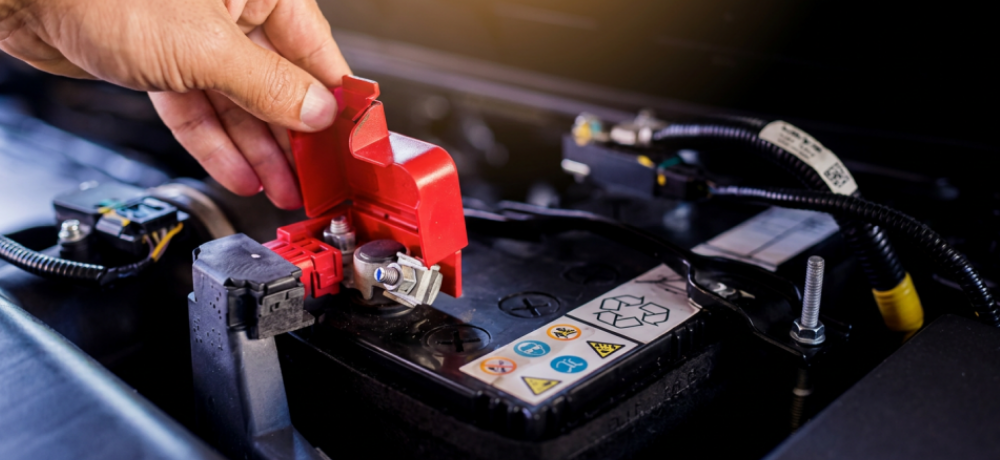
Contact-based coupling offers major benefits for mobile robot fleets: better energy efficiency, lower upfront investment and reliable telematics data transfer. Compared to wireless charging, contact-based systems recover a higher percentage of energy, allowing batteries to reach 75-98% of their capacity, making operations more efficient and cost-effective over time.
Additionally, these designs enable robust telematics data transfer between battery management systems and chargers. This provides fleet managers with actionable insights to optimize deployment, maintenance, and workflows. While wireless transmission is possible, wired connections remain faster and more reliable for transferring critical operational data.
Which Charging Strategy and Charge Coupling Design are Best?
The best contact-based charge coupling design is entirely based upon the use cases of an OEM’s target market and application. For example, automated connector systems may be best for full automation, whereas guided plate-to-plate connections still perform well in human-robot shared environments.
However, regardless of which charge coupling designs OEMs adopt, fleet orchestration will become increasingly reliant on a foundation of robust charging infrastructure and optimizations achieved by leveraging AI and data communications.